
Project information
- Category: BI Analysis - Marketing
- Client: Marketing Team - executives
- Project URL: Github Repository
- Report URL: PDF Report
Explanation
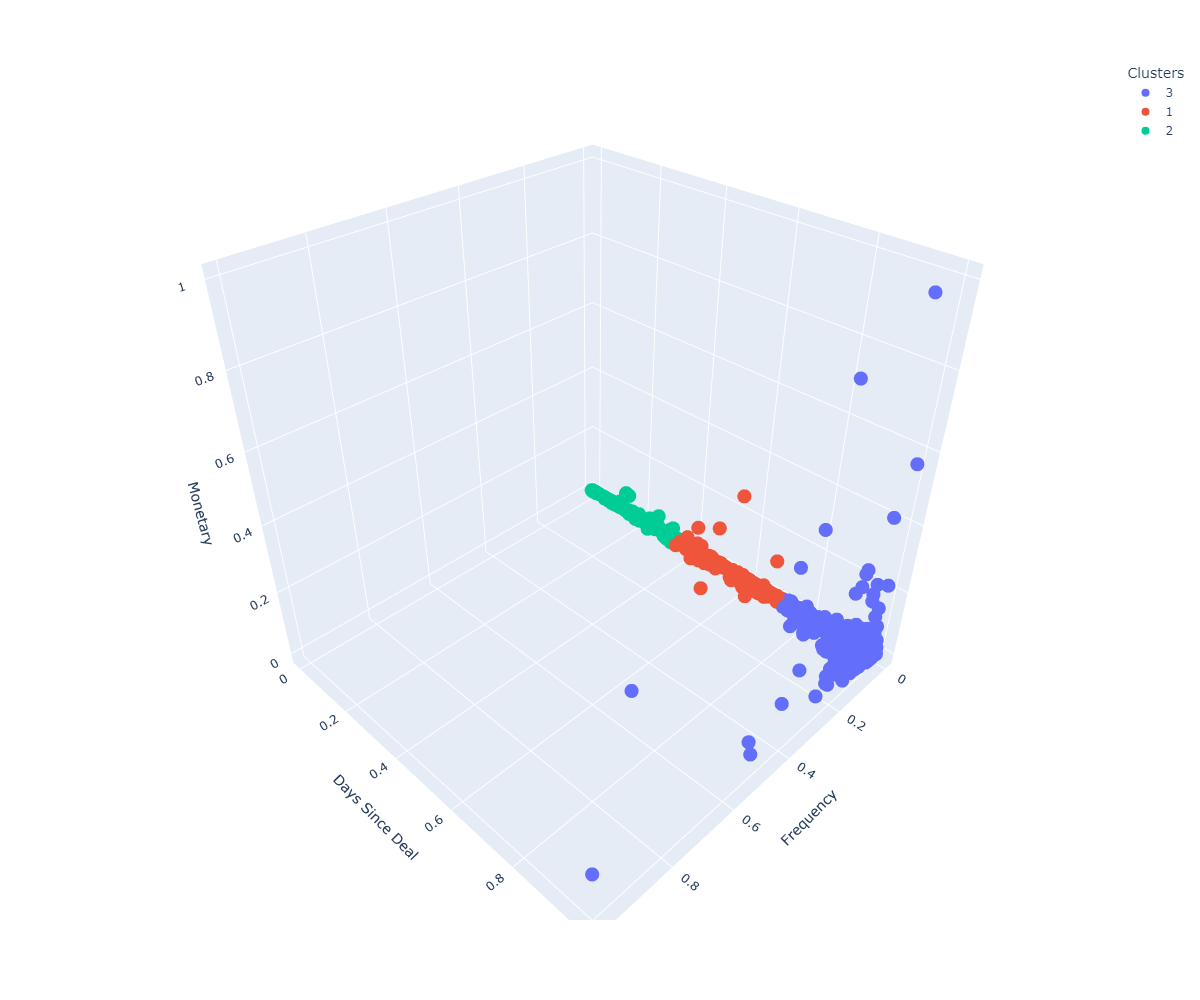
RFM technique RFM analysis, a widely used marketing technique, relies on three crucial parameters: Recency, Frequency, and Monetary Value. To assess the suitability of our database for RFM analysis, we'll examine its features and characteristics.
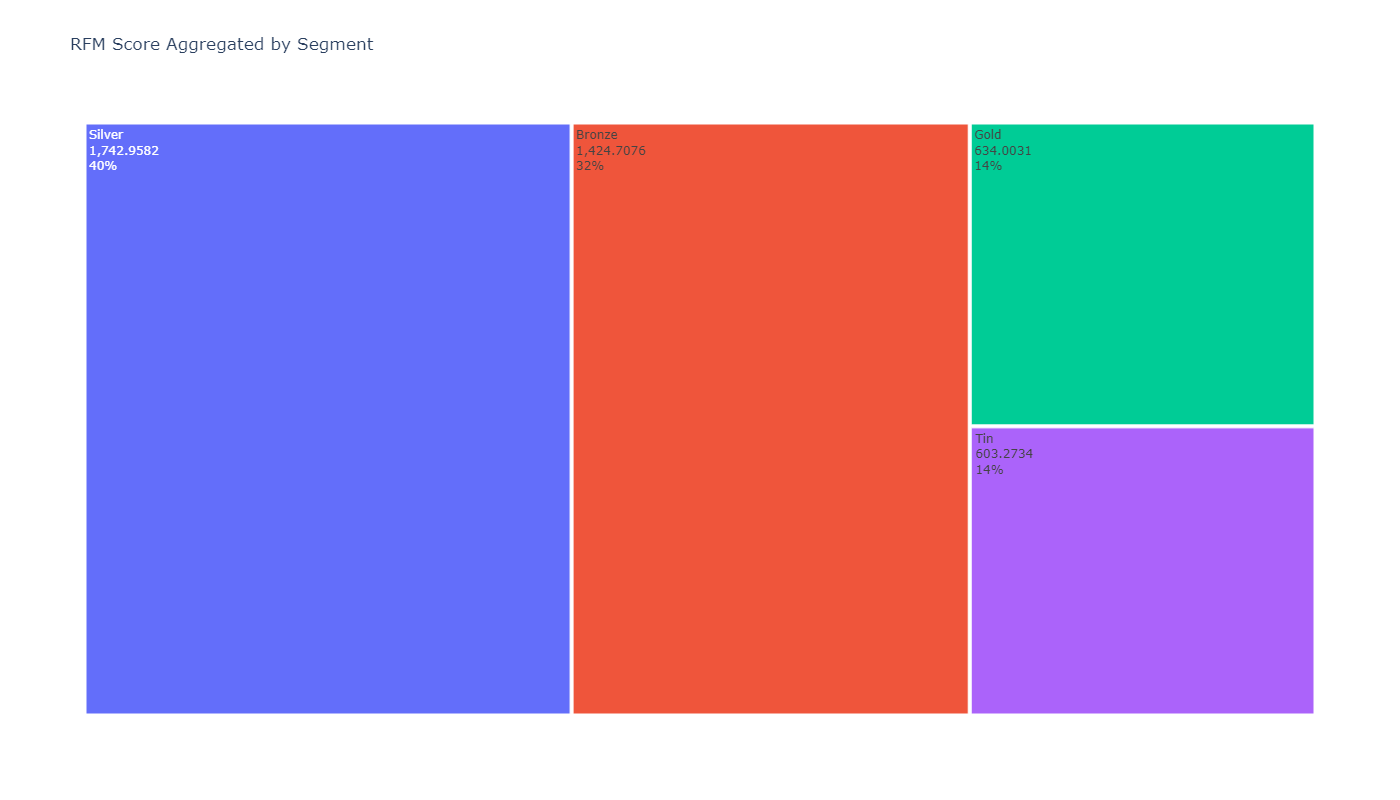
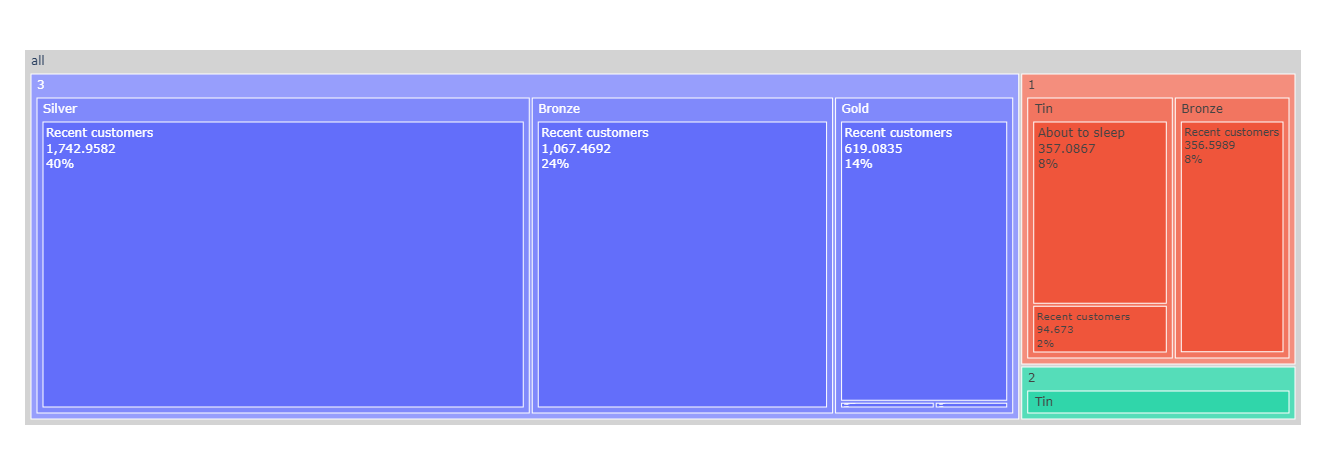
RFM analysis categorizes customers based on Recency, Frequency, and Monetary Value. It helps businesses identify and prioritize customer segments, enabling targeted marketing strategies. This approach enhances customer engagement, satisfaction, and retention.
1. Recency:
The dataset encompasses user interactions recorded during the years 2009, 2010, and 2011. Within this timeframe, numerous deals were captured, allowing us to examine the most recent interactions users had with our system.
2. Frequency:
The dataset reveals a significant variation in interaction frequency. The highest number of deals for a user is 12,638, while the lowest is just one. This broad spectrum of interaction frequencies provides valuable insights into user engagement with the system.
3. Monetary Value:
Calculating the total value each user contributed to the system involves multiplying the unit price by the quantity of items purchased and summing them up. This monetary analysis allows us to gauge the financial impact of each user on the system.